
Introduction
Chronic constipation (CC) is defined by the presence of two or more of the following symptoms: excessive straining, fewer than three bowel movements per week, passage of hard stools, sensation of incomplete evacuation, use of digital maneuvers to assist defecation, and sensation of anorectal blockage during the defecatory act. These symptoms must have been present during the last 3 months and must have begun at least 6 months prior to diagnosis.1,2
Epidemiology
The global prevalence of CC is 12-17%, being higher in females (odds ratio [OR]: 1.87-2.62); it increases with age, affecting more than 50% of subjects aged ≥ 80 years, as well as non-white populations.3,4 In Mexico, the prevalence is 22.3%, with a female-to-male ratio of 1.2.5
Causes of chronic constipation
CC may be primary or secondary. Secondary causes of CC are multifactorial (medications, mechanical, endocrine, metabolic, neurological, myogenic, enteric neuropathies, anorectal disorders, etc.).2,6 Once secondary causes of constipation have been ruled out, it is classified as functional chronic constipation (FCC).7
Diagnosis of functional chronic constipation
Patients should be evaluated according to the Rome IV criteria (Table 1), and a stepwise approach should be proposed as follows:
Table 1. Rome IV criteria for the diagnosis of functional constipation
| Diagnostic criteria for functional constipation* |
| Must include two or more of the following†: |
| Excessive straining during at least 25% of bowel movements |
| Hard stools (Bristol Stool Scale 1 or 2) in at least 25% of bowel movements |
| Sensation of incomplete evacuation in at least 25% of bowel movements |
| Sensation of anorectal obstruction or blockage in at least 25% of bowel movements |
| Use of digital maneuvers to facilitate evacuation at least 25% of the time |
| Fewer than three bowel movements per week |
| Loose stools rarely present without the use of laxatives |
| Insufficient criteria for irritable bowel syndrome |
|
* Criteria must be fulfilled for the last 3 months, but symptoms must have begun at least 6 months prior to diagnosis. † Patients with a diagnosis of opioid-induced constipation will be excluded; however, both conditions may overlap. |
- -History-taking: Alarm features should be ruled out, such as weight loss (> 10% over 3 months), transrectal bleeding, and family history of colon cancer. The use of digital maneuvers to facilitate defecation should be inquired about, as this suggests dyssynergic defecation (DD).8 Stool consistency should be assessed using the Bristol Stool Scale, according to which the presence of scybala (Bristol type 1) is associated with slow colonic transit and liquid stools (Bristol type 7) with rapid colonic transit.9,10
- -Physical examination: Central nervous system disorders and spinal lesions should be excluded. Abdominal distension, pain, and the presence of masses should be evaluated. A digital rectal examination is essential for identifying fecal impaction, anal stenosis, masses, pain, or paradoxical contraction of the anal sphincter or puborectalis muscle, which suggests DD, with a sensitivity of 75%, a specificity of 87%, and a positive predictive value of 97%.11
- -Minimum laboratory investigations: A complete blood count should be requested; thyroid function tests and calcium levels should be added only in patients with suggestive clinical findings. In patients over 50 years of age with a new diagnosis or changes in bowel habits, colonoscopy is recommended.1
- -Specific tests: In patients who do not respond to a therapeutic trial with laxatives, anorectal manometry is recommended as the first study, since up to 50% of patients with CC have DD. Additionally, the balloon expulsion test has a specificity of 89%, a sensitivity of 88%, a negative predictive value of 97%, and a positive predictive value of 67%.6 Colonic transit is an objective method for evaluating patients with slow transit, which can be measured by three methods: 1) ingestion of radiopaque markers, 2) scintigraphy with radiolabeled isotopes (geometric center), and 3) wireless motility capsule (SmartPill™).7 Defecography can detect anatomical defects, as well as the inability to relax the puborectalis muscles or a decrease in the anorectal angle, which are characteristic features of DD.12 The rational use of these diagnostic methods will be determined by the clinical context and patient characteristics. It is important to emphasize that the vast majority of patients with FCC do not require studies for diagnosis, which will always be clinical.
Classification of functional chronic constipation
According to its pathophysiology, constipation can be classified as follows:
- -Slow-transit constipation (10-20%): characterized by a prolonged delay in the transit of feces through the colon.
- -DD: a form of obstructive defecation characterized by the inability to expel feces due to rectoanal incoordination (Fig. 1 and Table 2).
- -Irritable bowel syndrome with constipation: abdominal pain is the predominant symptom, with alterations in bowel habits.
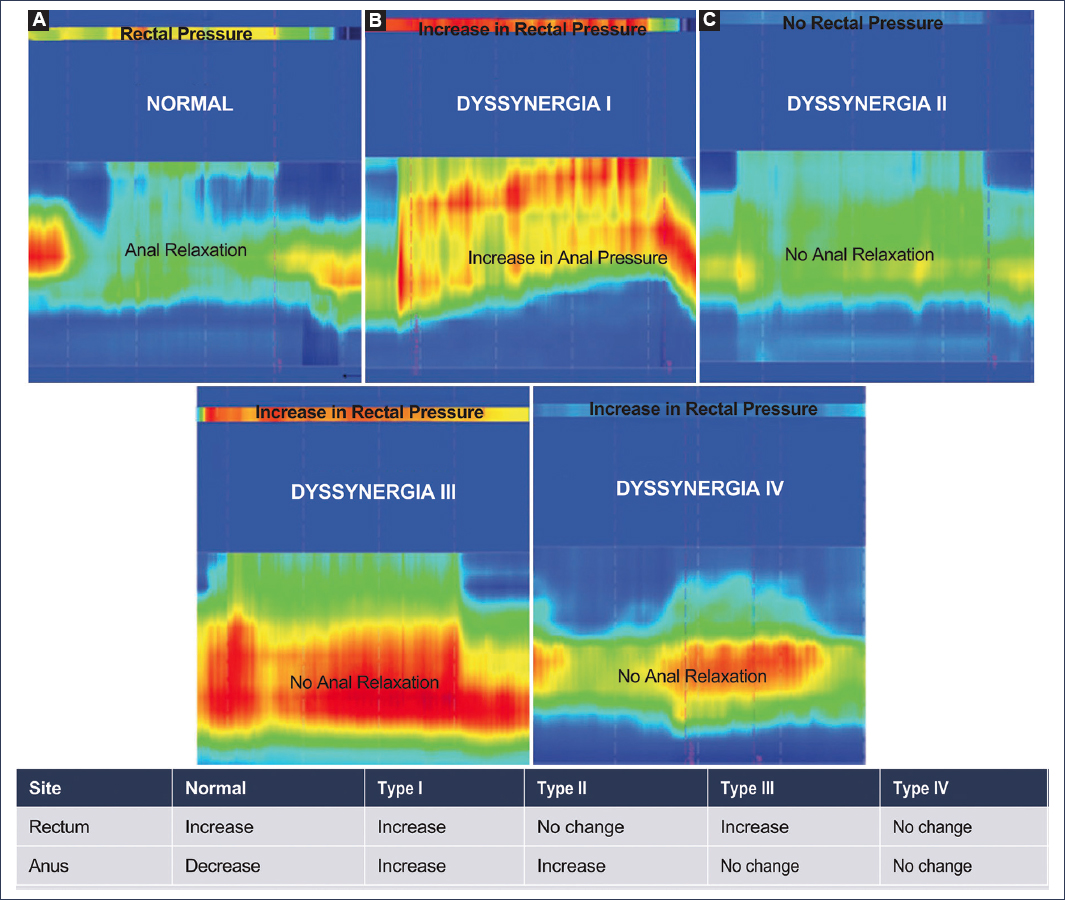
Figure 1. Examples of normal defecatory pattern and dyssynergic defecation by high-resolution anorectal manometry.
Table 2. Rome IV criteria for the diagnosis of functional defecation disorders
| F3 Diagnostic criteria for functional defecation disorders* |
| Patients must fulfill the diagnostic criteria for functional constipation or irritable bowel syndrome with constipation |
| During repeated attempts at defecation, there must be evidence of impaired defecation, demonstrated by two or more of the following criteria: |
| Inability to expel the balloon within 1 minute |
| Abnormal defecatory pattern demonstrated by anorectal manometry or electromyography |
| Inability to evacuate the rectum demonstrated by imaging |
| Categories F3a and F3b apply to patients who meet the criteria for functional defecation disorders |
| F3a Diagnostic criteria for inadequate defecatory propulsion |
| Inadequate propulsive force as assessed by anorectal manometry, with or without inadequate contraction of the anal sphincter or pelvic floor muscles† |
| F3b Diagnostic criteria for dyssynergic defecation |
| Inadequate contraction of the pelvic floor as measured by electromyography or anorectal manometry, with adequate propulsive force during the act of defecation† |
|
a Criteria must be fulfilled for the last 3 months, but symptoms must have begun at least 6 months prior to diagnosis. † These criteria are defined within normal limits depending on age and sex. |
It is important to note that overlapping subtypes may occur in the same patient.
Initial treatment for patients with functional chronic constipation
As with any other condition, the physician–patient relationship and strict therapeutic adherence are essential for achieving an optimal response and dispelling the misconception that laxatives cause dependence or may be dangerous.
General measures
AEROBIC PHYSICAL EXERCISE
A regular aerobic physical activity program can be effective, as it improves total colonic transit and transit in the rectosigmoid (79.2 to 58.4 h and 17.5 to 9.6 h, respectively; p < 0.05).13 In addition, it decreases the number of phasic contractions in the colon, offering less resistance to flow, and is associated with an increase in the number of high-amplitude propagated contractions, thereby improving colonic propulsion.14 A beneficial effect on abdominal distension has also been reported.15
FLUID INTAKE
In a randomized trial, an intake of 2 liters of water per day, combined with a high-fiber diet, improved stool frequency and reduced laxative use in patients with CC.16 However, no clinical trials are available demonstrating that fluid intake alone, without other additional measures, improves CC, except in dehydrated patients, particularly older adults. In conclusion, this measure offers some benefit in mild FCC when combined with adequate fiber intake.17
HIGH-FIBER DIET
A gradual increase in fiber is recommended to avoid abdominal distension; the recommended daily fiber intake is 20-30 g. A meta-analysis concluded that consumption of 100 g/day of dried prunes improved FCC.18
Fiber supplements
Fiber is classified as soluble or insoluble based on its behavior in aqueous solution. These are polymers of complex carbohydrates that reach the colon intact, increase fecal bulk, and are fermented by the microbiota, producing short-chain fatty acids, water, and gases (hydrogen, methane, and carbon dioxide). The biological effects of fiber include acceleration of colonic transit and an increase in biomass with changes in colonic pH and the microbiota.17
A meta-analysis of 1,072 references, comprising seven clinical trials, demonstrated that soluble fiber increased the number of bowel movements and stool consistency compared with placebo, with moderate evidence supporting the use of fiber; however, as with other meta-analyses, conclusions are difficult to draw due to study heterogeneity.19
In a randomized clinical trial with 72 patients aged 18 to 75 years, of whom 40 received soluble fiber (5 g of psyllium twice daily) and 32 received insoluble fiber (5 g of Supra Fibra twice daily, a fiber derived from plum, cranberry, pomegranate, and açaí berries) for 4 weeks, 30 patients (75%) responded with mixed fiber and 24 (75%) with psyllium (p = 0.9). Improvements were observed in stool consistency (p = 0.04), reduced straining during evacuation (p = 0.006), and decreased abdominal distension (p = 0.02); furthermore, an improvement in flatulence was reported (53% vs. 25%, p = 0.01), and patients reported that the mixed fiber dissolved more easily (p = 0.02) compared with psyllium. Quality of life improved with both treatments, with no difference between groups (p = 0.0125).20
The use of fiber as a first-line therapeutic measure is reasonable in any patient with FCC, taking into account the constipation subtype, since patients with slow colonic transit or DD respond poorly to a fiber trial.
Osmotic laxatives
These laxatives contain non-absorbable ions or molecules that retain water in the intestinal lumen, thereby increasing peristalsis. Available agents include lactulose and sorbitol, both non-absorbable disaccharides that pass unchanged into the colon, where they are metabolized by bacteria into formic, acetic, and lactic acids; as well as polyethylene glycol and magnesium salts. The latter should be used with caution in patients with renal insufficiency due to the risk of hypermagnesemia.21
In a meta-analysis of 10 studies, polyethylene glycol was superior to lactulose in terms of number of bowel movements and stool consistency, both in adults and in the pediatric population, with a number needed to treat of 3 (95% confidence interval [95% CI]: 2-4) for polyethylene glycol and 4 (95% CI: 2-7) for lactulose.22,23
Stimulant laxatives
These agents promote electrolyte transport in the colon, increasing intraluminal water with enhancement of colonic peristalsis through stimulation of the myenteric plexus. Stimulant laxatives include the diphenylmethanes (phenolphthalein, bisacodyl, sodium picosulfate) and the anthraquinones (senna, cascara sagrada, aloe vera).17
Two clinical trials evaluated the efficacy of bisacodyl and sodium picosulfate. In the first, 247 patients treated with 10 mg of bisacodyl were included; in the second, the efficacy of sodium picosulfate (10 mg) was evaluated in 131 patients. In both studies, the use of stimulant laxatives was superior to placebo for improving FCC. Long-term treatments may cause electrolyte imbalances as well as tolerance, and therefore should be used with caution in older adults, patients with heart failure, or in combination with diuretics or steroids.24,25
The use of sennosides plus fiber versus lactulose has been evaluated, achieving 4.5 bowel movements per week compared with 2.2, respectively.26
Second-line treatment for functional chronic constipation
Serotonergic agents: prucalopride, tegaserod, velusetrag, naronapride, and YKP10811
These are prokinetics and agonists of 5-HT4 receptors, whose mechanism of action is located postsynaptically, promoting excitation and releasing acetylcholine, which stimulates smooth muscle contraction in the intestine and facilitates intestinal secretion. They have no affinity for the potassium channel family receptor known as ether-a-go-go (hERG), and therefore are not arrhythmogenic.27
Five multicenter phase III trials of prucalopride have demonstrated improvement in constipation, pain, abdominal distension, and quality of life. A meta-analysis including nine trials also confirmed the efficacy of prucalopride, achieving at least three bowel movements per week with improvement in quality of life and stool consistency. Its efficacy has been evaluated for up to 36 months. Furthermore, a comparison of prucalopride with polyethylene glycol showed non-inferiority relative to the latter. The recommended dose is 2 mg/day in adults and 1 mg/day in older adults; a dose of 4 mg/day has been used for refractory constipation difficult to manage in tertiary care centers. The main adverse effects are headache, diarrhea, nausea, and abdominal pain. Dose adjustment is required in cases of renal insufficiency based on the glomerular filtration rate, as well as in patients with severe hepatic insufficiency.27 In a meta-analysis using indirect comparison, prucalopride at a dose of 1 mg/day demonstrated superiority over diphenylmethane-derived stimulant laxatives and tegaserod at a dose of 2 mg/12 hours.28
New generations of 5-HT4 agonists not yet approved include velusetrag, naronapride, and YKP10811. The first is a quinolone derivative, a benzofuran, developed after prucalopride; its high efficacy and safety have been demonstrated in a phase II study in patients with CC, at doses of 15, 30, and 50 mg/24 hours, in terms of the number of bowel movements compared with placebo. Its main adverse effects were diarrhea, headache, nausea, and vomiting. Naronapride and YKP10811 are also under development in phase I and II studies, respectively.29
In a meta-analysis of 13 trials (11 with prucalopride, one with velusetrag, and one with naronapride), a significant improvement was observed with all three 5-HT4 agonists compared with placebo in terms of increased number of weekly bowel movements and quality of life.30 YKP10811 is a selective 5-hydroxytryptamine receptor 4 agonist that has demonstrated acceleration of intestinal transit of 6 hours (p < 0.05) in patients receiving 10 and 20 mg for 8 days, as assessed by scintigraphy.31
Tegaserod, a partial 5-HT4 agonist discontinued in 2007 by the Food and Drug Administration (FDA) due to cardiovascular risks, is available in Mexico for the treatment of CC in women under 55 years of age without cardiovascular risk. It increases the number of bowel movements per week, with improvement in symptoms of abdominal pain and satisfaction over a 12-week period. In a meta-analysis of 11 studies, tegaserod demonstrated efficacy (0.85, 95% CI: 0.80-0.90), suggesting that it alleviates the symptoms of FCC.29
Secretagogues
DIRECT CHLORIDE CHANNEL ACTIVATOR: LUBIPROSTONE
Lubiprostone is a prostaglandin E1 that activates type 2 chloride channels of the luminal membrane of the enterocyte, producing an increase in chloride secretion into the intestinal lumen, with enhancement of colonic transit. The dose is 24 mg twice daily by the oral route. Its efficacy corresponds to a number needed to treat of 4 (95% CI: 3-7). Adverse effects include nausea (20%), diarrhea (10%), and headache (7%). Although there is no evidence of hepatic metabolism, the FDA recommends dose reduction in patients with advanced liver disease.32
GUANYLATE CYCLASE C ACTIVATORS: LINACLOTIDE AND PLECANATIDE
Linaclotide and plecanatide are guanylate cyclase C agonists; their stimulation produces an increase in cyclic guanosine monophosphate in enterocytes, with increased secretion of bicarbonate and chloride into the intestinal lumen through the transient opening of cystic fibrosis receptors.32
Linaclotide is a 14-amino acid peptide that acts as a guanylate cyclase C agonist with a dual mechanism of action, accelerating intestinal transit through increased intestinal secretion and reducing visceral hypersensitivity. It has demonstrated efficacy in relieving the symptoms of FCC with a number needed to treat of 7 (95% CI: 5-11), at a dose of 145 mg/day by oral route. In clinical trials, diarrhea has been reported in approximately 20% of patients, and in only 2% of cases is it classified as severe, with drug discontinuation in 4.5% of patients.17 In a meta-analysis of three linaclotide trials, with a total of 1,582 patients, a significant improvement compared with placebo was observed in the number of bowel movements, stool consistency, straining, satisfaction, and quality of life (OR: 0.84; 95% CI: 0.80-0.87), as was also found in the same meta-analysis with three randomized trials of lubiprostone in 610 patients (OR: 0.67; 95% CI: 0.56-0.80).33
Plecanatide is an analog of uroguanylin, a 16-amino acid peptide. In phase III studies, 41.9% of patients who received plecanatide in the 3 mg group and 40% in the 9 mg group showed ≥ 30% improvement in abdominal pain and an increase of ≥ 1 bowel movement over 6 to 12 weeks, with diarrhea being the most common adverse effect.32
Ileal bile acid transporter inhibitor: elobixibat (A3309)
Elobixibat acts by inhibiting the bile acid transporter at the level of the terminal ileum, with a triple action: it increases bile acids in the colon, produces a cathartic effect by increasing the permeability of the epithelial barrier secondary to activation of cyclic adenosine monophosphate, stimulates motility, and promotes secretion. Furthermore, it has been shown to improve rectal sensitivity and, consequently, the urge to defecate.34 In a study of 36 women with FCC, it improved stool consistency and frequency of bowel movements at a dose of 20 mg/day for 2 weeks, as did a phase IIb trial in 190 patients with CC at doses of 10 and 15 mg for 8 weeks.35,36
In a phase III study, elobixibat has demonstrated improvement in the median time to the first bowel movement from 5.1 vs. 25 hours compared with placebo.37 In a meta-analysis comparing elobixibat (10 mg), linaclotide (0.5 mg), lubiprostone (48 mg), lactulose (26 g), and placebo, an 81% improvement in spontaneous bowel movements was reported within 1 week, a 43.8% reduction in the time to the first spontaneous bowel movement, and an 84.8% increase in complete evacuation within 1 week.38 Compared with placebo, elobixibat, linaclotide, and lubiprostone had ORs of 5.6, 1.9, and 2.4, respectively, and the number needed to treat for these outcomes is 3.39
Evidence exists for a reduction in the constipation index in adults aged 60-65 years, with an increase in frequency from 2.0 ± 0.73 to 4.4 ± 1.3 within 1 week and improvement in consistency according to the Bristol Stool Scale from 2.2 ± 0.75 to 3.8 ± 0.70 (both p < 0.001).40 In patients with Parkinson’s disease, a placebo-controlled clinical trial (CONST-PD) demonstrated an increase in the frequency of spontaneous bowel movements and an improvement in quality of life.41 Compared with magnesium oxide (n = 30), the elobixibat group (n = 43) showed improvement in the perception of the urge to defecate (33 vs. 54%; p < 0.001), the volume at the urge to defecate (–0.1 vs. 35 ml; p < 0.001), and the change from slow to normal transit (37 vs. 87%; p = 0.003).42 These results were reproduced in a placebo-controlled clinical trial in adults over 60 years of age.43 The most common adverse effects are mild abdominal pain (24%), followed by diarrhea (15%), which are generally tolerable, and it is safe in irritable bowel syndrome with constipation.44
New therapeutic targets: ghrelin agonists (relamorelin)
Relamorelin (RM-131) is a pentapeptide ghrelin agonist that acts on the circular muscle layer of the colon, decreasing excitability and intraluminal pressure. In a randomized, double-blind clinical trial, relamorelin at a dose of 100 mg subcutaneously was found to induce a greater number of preprandial and postprandial propagated contractions compared with placebo (p < 0.05), without altering irregular contractions. The response is comparable to that of other prokinetics.45 Studies have been conducted in Parkinson’s disease to explore this benefit.46 Common adverse effects include dizziness, fatigue, abdominal pain, hunger, and feelings of cold or muscle weakness. Despite being a promising drug, further studies are needed to establish its chronic effect on colonic motility.47
Pharmacological treatment for opioid-induced constipation
The drugs approved for opioid-induced constipation are lubiprostone, oxycodone-naloxone, methylnaltrexone, and naloxegol. Under investigation are axelopran, naldemedine, linaclotide, TRV-130, alvimopan, and prucalopride.48
Methylnaltrexone, alvimopan, and naloxegol act as peripheral mu-opioid receptor antagonists, reversing gastrointestinal effects without affecting central analgesia.
Methylnaltrexone decreases colonic transit, promoting gastrointestinal motility and secretion. The dose is 8-12 mg (0.15-0.3 mg/kg) every 48 hours by subcutaneous route; dose reduction is required in cases of renal insufficiency or hepatic failure. Several clinical trials have demonstrated its efficacy compared with placebo in terms of the number of bowel movements, the induction of the first bowel movement within the first hour, and patient satisfaction. Reported adverse effects include abdominal cramping (~28%), flatulence (~13%), nausea (~11%), and dizziness (~7%).
Naloxegol, a pegylated derivative of naloxone, at doses of 12.5-25 mg/day by oral route, improves the number and form of bowel movements per week and quality of life. Caution is recommended in cases of renal insufficiency. The main adverse effects are abdominal pain, nausea, diarrhea, and headache.
Alvimopan is approved for postoperative ileus but not for opioid-induced constipation due to its cardiovascular effects, including acute myocardial infarction (AMI).48
Anorectal biofeedback therapy
Anorectal biofeedback therapy (ABFT) consists of visual, auditory, and sensory interaction to improve anorectal coordination and abnormal rectal sensitivity, with the aim of restoring a normal pattern in the defecatory mechanism. Sessions are typically scheduled every 2-3 weeks, and an average of four to six training sessions is required. After completing neuromuscular training, reinforcement sessions are conducted at 3, 6, and 12 months to consolidate the therapy. The success rate of ABFT is 70-85%.49 A Cochrane review of 17 studies with 931 participants with DD concluded that there was insufficient evidence regarding the efficacy and safety of ABFT, given that the studies were of low quality. However, in three randomized trials, ABFT was superior to sham therapy, polyethylene glycol, and diazepam,32 and therefore, with the current high level of evidence, guidelines have assigned ABFT a Grade A recommendation for the treatment of DD.50 In a systematic review, ABFT demonstrated a long-term effect (40%) in DD and, to a lesser extent, in slow transit.51 In a pilot study, a wireless device was used to perform ABFT at home, and it was demonstrated that patients with chronic constipation adhere to 76% of sessions; of these, 90% complete the therapy and 70% respond (p < 0.001), resulting in non-inferiority compared with in-office ABFT.52
Vibrating capsule (VIBRANT®, Vibrabot®)
The vibrating capsule was developed in response to the unmet need for a response to novel pharmacological approaches. It consists of an external configuration device and a vibrating capsule measuring 26.7 × 11.8 mm that initiates 8 hours after ingestion and lasts 6 hours, with a vibration frequency of 12 cycles per minute in low-medium-high stimulation loops (3-9 Hz) and four vibration modes.53 Through direct mechanical intestinal stimulation or luminal dispersion of feces, it improves the circadian rhythm and the capacity of the colon to facilitate intestinal transit.54
The vibrating capsule (VIBRANT®) has been shown to increase the mean number of bowel movements per week (response rate of 88.5%). In a double-blind phase III study, patients classified as having severe constipation showed improvement in the number of complete spontaneous bowel movements (complete spontaneous bowel movement 1 ≥ 1, ≥ 2, and ≥ 3) compared with those receiving placebo (44.9% vs. 20.9%; p = 0.007), complete spontaneous bowel movement 2 (29.2% vs. 11.6%; p = 0.004), and complete spontaneous bowel movement 3 (19.10% vs. 6.98%; p = 0.017), respectively.55 The same result was observed in a study conducted in China, with an overall response rate of 64.2% vs. 35.8% versus placebo (p = 0.005) and at least ≥ 1 complete spontaneous bowel movement.56 In contrast, a prospective, double-blind, placebo-controlled study found no differences in colonic transit as assessed by scintigraphy (geometric center of VIBRANT® compared with sham capsule at 48 hours: 2.76 vs. 3.46; p = 0.13).57 In a meta-analysis of 14 studies using SUCRA (Surface Under the Cumulative Ranking curve) analysis, the vibrating capsule was found to have lower performance in overall improvement and spontaneous bowel movements, at 24.1% and 25.2%, respectively, falling below therapies such as electroacupuncture, probiotics, diet, and abdominal massage; however, it demonstrated superior efficacy in changing stool consistency on the Bristol Stool Scale at 74.2%.58 Adverse effects are similar to those in the placebo group, with the most frequent being headache (7.1-12%), abdominal discomfort (2.9%), distension and flatulence (2.9%), and diarrhea (1.9%).59 Contraindications include the presence of structural abnormalities such as dysphagia, Zenker’s diverticulum, achalasia, obstruction or stenosis, a history of inflammatory bowel disease, neoplasms, use of a pacemaker, and gastroparesis.
Surgical treatment
Surgery should be reserved for exceptional cases of constipation in which DD has been ruled out, in patients who fail aggressive medical therapy and ABFT, and in those in whom colonic neuropathy with motility abnormalities confined exclusively to the colon has been demonstrated by gastric scintigraphy, antroduodenal manometry, or SmartPill™.
Colectomy
No controlled surgical studies exist; only case series reviews of 48 studies with 1,443 patients with slow-transit constipation, in which the most frequent procedure, in 39 studies (1,046/1,443; 72% of patients), was total colectomy with ileorectal anastomosis. The mean defecatory frequency increased from 1.1 to 19.7 bowel movements per week, with a 65% improvement rate. In 88% of patients, postoperative use of laxatives was not required, with improvement in quality of life and satisfaction; however, the quality of the studies is low and heterogeneous.52
Sacral nerve stimulation
This consists of stimulation of the sacral nerve roots S3-S4 via implanted electrodes, initially in a temporary manner for 4 weeks and then permanently. In a multicenter European study with 62 patients, the device was permanently implanted in 73%, with sustained improvement at 28 months in symptoms of constipation, pain, and abdominal distension.60 However, its efficacy remains uncertain, particularly in the long term. In a 3-week study comparing sham versus active sacral stimulation therapy, no difference was observed between the two groups.61 In a systematic review of 17 studies, transcutaneous neuromodulation of the sacral and tibial nerves was evaluated, with heterogeneous results, concluding that the functional benefit remains controversial; however, it represents an alternative in refractory patients before resorting to definitive interventions.62
Other non-pharmacological treatments (not approved)
Transcutaneous electrical nerve stimulation and intermittent colonic exoperistalsis
In a proof-of-concept study, transcutaneous abdominal electrostimulation was used, which demonstrated improvement in symptoms but with low tolerability rates. This modality applies two medium-frequency currents that are out of phase with each other on the anterior and posterior walls, generating a modulated low-frequency intra-abdominal current.
Intermittent colonic exoperistalsis uses a pneumatic abdominal massage belt that exerts rotational pressure. In an open-label study, an improvement in complete spontaneous bowel movements and a reduction in laxative use were observed after 4 weeks with one daily 20-minute session.63
Transanal irrigation
Transanal irrigation has been described as a traditional therapeutic alternative. It consists of performing a transanal irrigation of 500 to 1,000 ml to promote complete emptying of the rectosigmoid in patients with CC. Its indications include neurogenic bowel dysfunction with a contraindication to laxatives, frequent fecal impaction with a surgical contraindication, and, in some cases, refractory constipation, with a reported improvement of 38%, but with dropouts due to adverse effects such as anal and abdominal pain.64
Abdominal massage
Abdominal massage is a low-cost, low-risk, non-invasive measure that can be incorporated into the daily routine of patients with CC, frail patients, or those with immobility. A systematic review included 23 studies evaluating non-pharmacological techniques and found that abdominal massage improved the frequency of bowel movements and stool consistency, primarily with acupressure (standardized mean difference [SMD] 1.63) compared with the circular manual technique (SMD 0.9) and electronic devices (SMD 0.83).65
Conclusion
FCC is a heterogeneous disorder that requires an individualized diagnostic and therapeutic approach based on its underlying pathophysiology. The optimization of general measures and the rational use of laxatives remain the cornerstone of treatment; however, in refractory patients, the incorporation of drugs with specific mechanisms of action (5-HT4 agonists, secretagogues, and bile acid transporter inhibitors), as well as non-pharmacological therapies (such as ABFT), can significantly improve symptoms and quality of life. Appropriate treatment selection, supported by a solid physician–patient relationship and accurate characterization of the constipation subtype, is key to achieving satisfactory clinical outcomes and avoiding unnecessary interventions.
Funding
The authors declare that they have received no funding for this study.
Conflicts of interest
The authors declare no conflicts of interest.
Ethical considerations
Protection of human and animal subjects. The authors declare that no experiments involving human subjects or animals were performed for this investigation.
Confidentiality, informed consent, and ethical approval. The study does not involve personal data, clinical records, or human biological samples, and therefore does not require ethical approval. The SAGER guidelines do not apply.
Statement on the use of artificial intelligence. The authors declare that no generative artificial intelligence was used in the writing or content creation of this manuscript.
